



The U.S. housing market in 2025 was, in many ways, a mixed year.
Inventory increased meaningfully, mortgage rates eased from their highs, and overall market activity picked up compared with the previous two years. Buyers and sellers both gained more room to maneuver, with more choices and greater negotiating flexibility.
At the same time, home prices remained elevated, affordability pressures persisted, and transactions moved at a more measured, rational pace.
Recently, Homes.com conducted a comprehensive review of the 2025 housing market, comparing early-year forecasts with actual outcomes and offering insights into what may lie ahead in 2026. Below, we summarize the key takeaways and share them with you.(Source: 2025 Housing Market Gut Check)

1. Inventory Continued to Rise
What was expected in early 2025
Experts anticipated that inventory would gradually recover as the post-pandemic supply shortage eased.
What actually happened
Inventory rose substantially. As of November, the number of homes actively listed for sale nationwide reached approximately 1.3 million, nearly double the level seen in February 2022 and about 17% higher year over year.
What to expect in 2026
Economists broadly expect inventory to continue growing in 2026, supported by both existing homes and new construction. Many homeowners remain watchful, waiting to see stronger buyer demand before listing.
2. Home Prices Continued to Rise, but at a Slower Pace
What was expected in early 2025
Most forecasts called for a long-waited slower home price growth.
What actually happened
That expectation largely proved correct. In November 2025, the national median home price stood at approximately $385,000, up about 2.4% year over year. This was well below the 4.7% increase recorded a year earlier and far from the 22.6% peak growth seen in May 2021.

For most of the year, prices remained within a relatively narrow range, roughly $375,000 to $395,000, reflecting limited volatility rather than sharp swings.
What to expect in 2026
Most economists expect price growth to continue slowing down in 2026. A meaningful decline in mortgage rates could reignite demand and place upward pressure on prices, but overall the market appears to be settling into a more balanced state.
3. Existing-Home Sales Improved Modestly
What was expected in early 2025
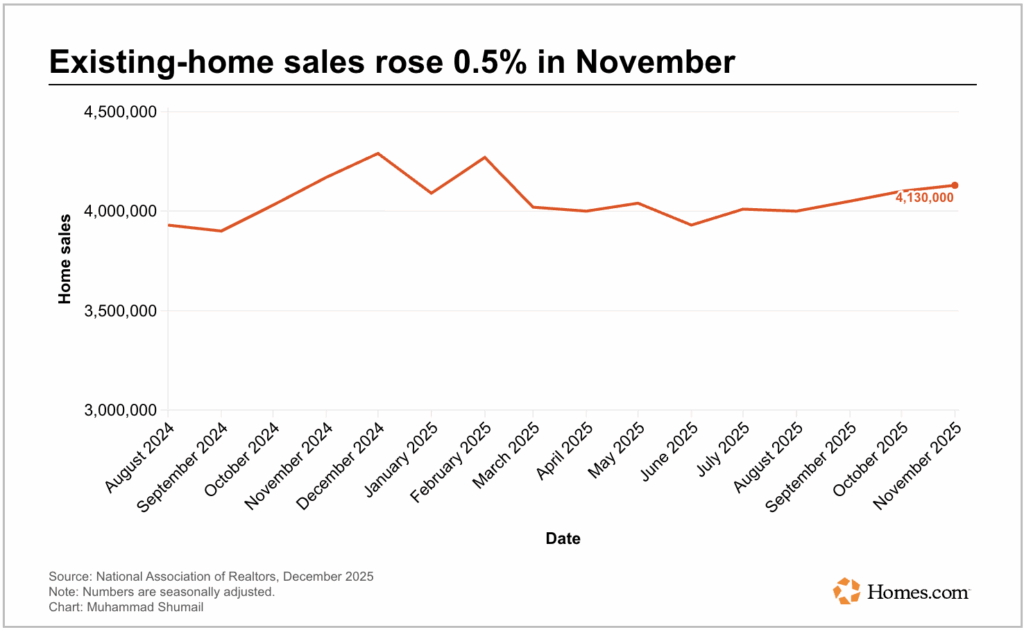
Existing-home sales were expected to improve slightly compared with 2024, while remaining well below pre-pandemic norms.
What actually happened
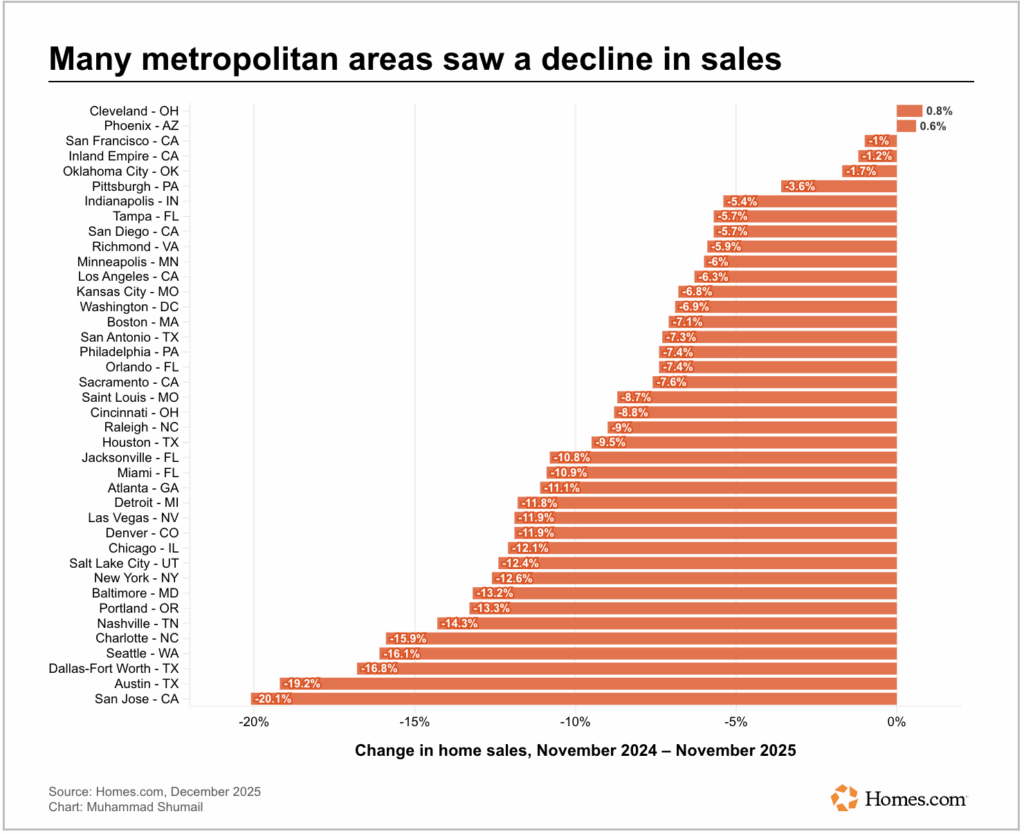
Sales did increase modestly. Through October, existing-home sales were about 2% higher year over year, though still more than 20% below pre-pandemic levels. Rising inventory helped support transactions, but many homeowners continued to hold onto ultra-low mortgage rates secured during the pandemic, limiting resale activity.
What to expect in 2026
Sales are likely to improve gradually rather than rebound sharply. Performance will vary widely by region, with many transactions driven by life events such as job changes, relocations, and household transitions.
4. Days on Market Increased
What was expected in early 2025
With more homes available for sale, economists predicted longer average days on market.
What actually happened
Transaction timelines did lengthen. According to Homes.com’s chief residential economist, rising median days on market closely tracked the increase in available inventory.
Data from the National Association of Realtors showed that January and February marked the yearly peak, with homes spending 41-42 days on the market. That figure fell to 28 days in July before rising again in the fall. By November, the median reached 36 days, up from 32 days a year earlier.
What to expect in 2026
Sellers may need to recalibrate expectations and price more carefully. As days on market continue trending toward pre-pandemic norms, accurate pricing will matter more than ever. Homes priced even slightly above market may face longer listing periods and eventual price reductions.
5. New-Home Sales Fell Short of Expectations
What was expected in early 2025
Many industry observers predicted that new-home sales and construction would rebound in 2025.
What actually happened
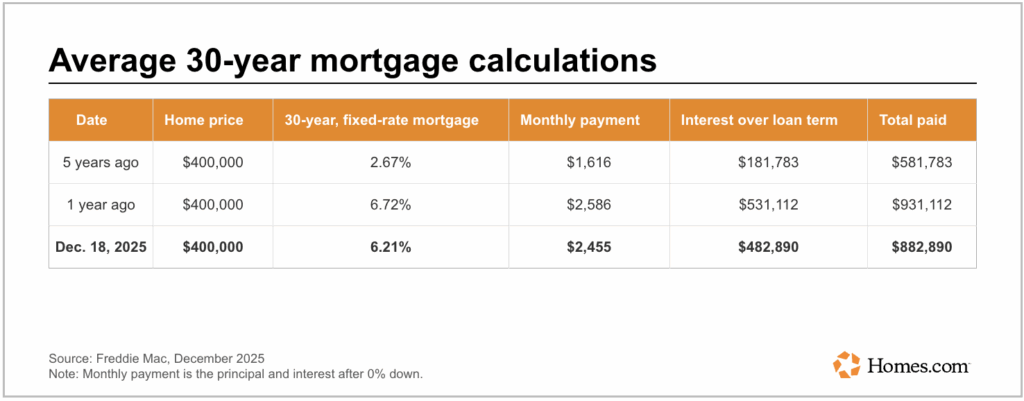
The rebound did not materialize. New-home sales declined by roughly 2%, while single-family housing starts fell about 7% year over year. Builders described the environment as largely “wait-and-see,” with mortgage rates remaining above 6% and pricing many buyers out of the market.
What to expect in 2026
Outlooks remain cautiously optimistic. Industry forecasts suggest new-home sales could increase by about 5%, while single-family construction may see a modest 1% uptick, signaling gradual improvement rather than rapid recovery.
6. Mortgage Rates Moved Lower
What was expected in early 2025
Mortgage rates were widely expected to play a central role in shaping market activity.
What actually happened
Rates declined from roughly 7.04% at the start of the year to about 6.22% by year-end, helping support both purchase and refinancing activity.
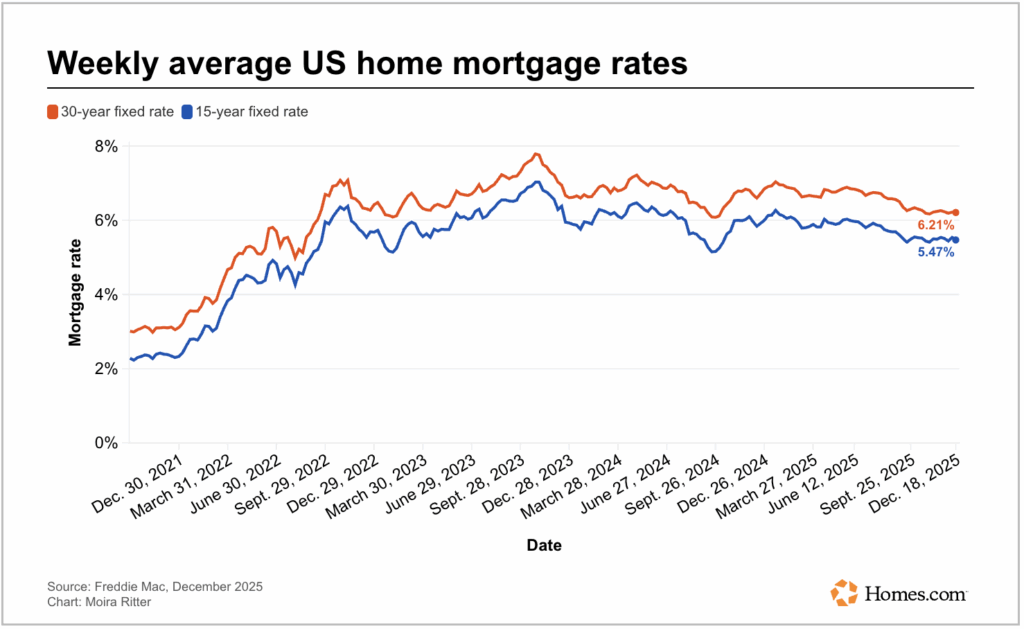
However, experts emphasized that rates alone tell only part of the story. Loan application activity fluctuated throughout the year, highly sensitive to rate changes. While purchase applications were stronger than in 2024, weekly volatility remained pronounced.
What to expect in 2026
Most forecasts anticipate mortgage rates hovering around 6.25%, suggesting continued stability rather than dramatic shifts.
Closing Thoughts
The 2025 housing market was not defined by reversal, but by recalibration.
Inventory rose, price growth slowed, transactions took longer, and mortgage rates eased, all pointing toward a more balanced and rational market environment. As 2026 approaches, outcomes are likely to diverge by region and strategy rather than move in a single national direction.

For buyers, choices are expanding. For sellers, pricing strategy matters more than ever. And for long-term investors, the market is shifting from a race for speed to a test of judgment.
📍 If you’d like a clearer view of how these trends apply to your goals, feel free to reach out to us, we’re always happy to discuss the path forward.