


In July 2026, the U.S. real estate and tax planning sectors reached a historic milestone: Opportunity Zones (OZ) officially entered the 2.0 redesignation phase.
During this unique policy transition window, tens of thousands of investors holding Capital Gains, from the sale of stocks, businesses, or real estate—are standing at a strategic crossroads:
- Should you wait for the new OZ 2.0 map to be finalized by the end of 2026?
- Or should you deploy capital into highly certain, existing OZ 1.0 projects right now?
Today, Real International Realty is breaking down the underlying tax logic and core investment strategies behind this 2.0 transition, utilizing the latest transition guidelines issued by the IRS.

I. A Quick Recap: The 3 Core Tax Benefits of Opportunity Zones
As a powerful federal tax incentive, the core purpose of Opportunity Zones is to use massive tax leverage to guide private capital into specific development areas. For high-net-worth investors, it offers one of the most attractive “triple tax-saving combos” in the current U.S. tax code:
- Tax Deferral: By investing capital gains into a Qualified Opportunity Fund (QOF), you can defer paying federal taxes on those initial gains.
- Step-Up in Basis: Under the latest regulations, new investments made after January 1, 2027, and held for 5 years can receive a 10% reduction on the original deferred tax liability (and up to 30% for specific rural projects).
- 100% Tax-Free Growth: This is the most powerful clause, if the investment is held for at least 10 years, all capital appreciation generated upon exiting the project is 100% exempt from federal capital gains taxes.

II. The OZ 2.0 Era: Stricter Rules, 25% Fewer Zones
From July 1 to September 28, 2026 (with a maximum extension to October 28), state governors have officially begun submitting their new Opportunity Zone (OZ 2.0) nominations to the Treasury Department.
It is crucial for all investors to understand that compared to the 1.0 era, the barrier to entry and selection criteria for OZ 2.0 are significantly stricter:
- Stricter Income Limits: The Median Family Income (MFI) of a qualifying tract must now be below 70% of the surrounding area (down from a more lenient 80% in the 1.0 era).
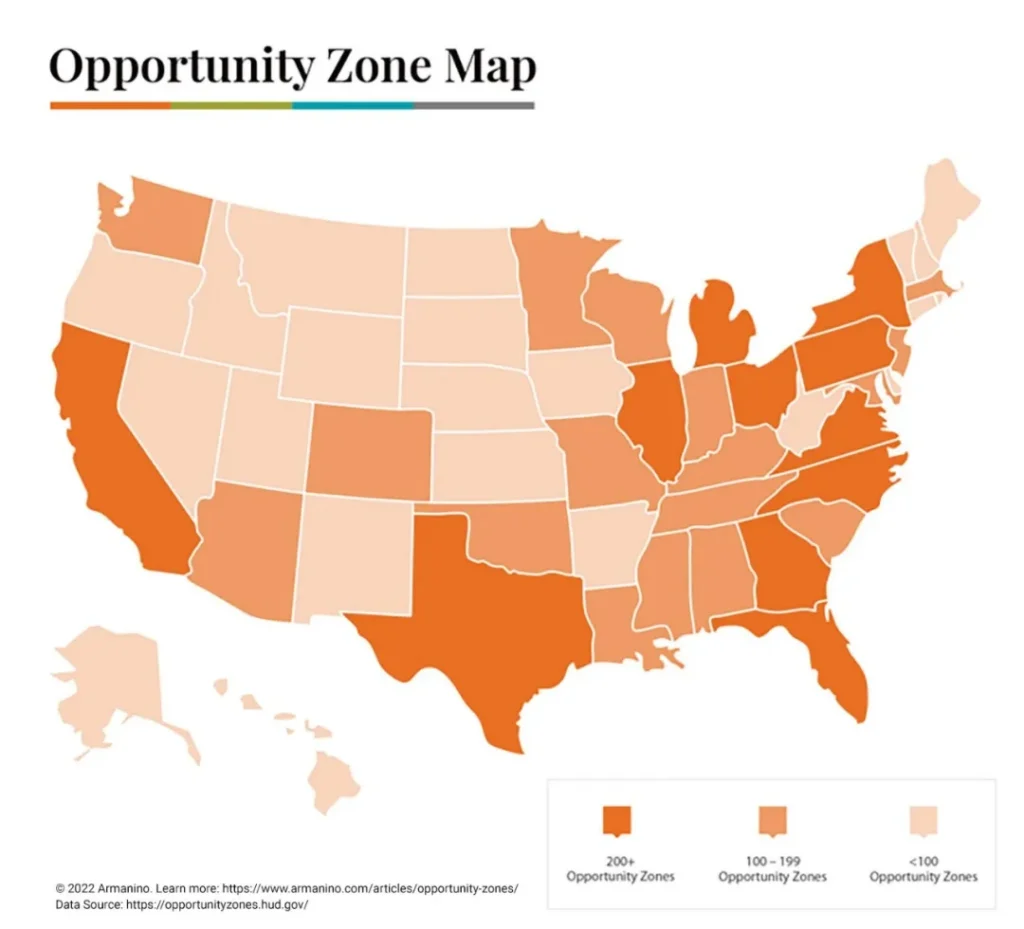
- Fewer Total Zones: Authoritative projections indicate that the total number of compliant Opportunity Zones nationwide will be directly slashed by 25%, leaving only about 6,544 designated tracts.

What does this mean for investors?
A substantial portion of the existing 8,764 OZ 1.0 tracts will lose their designation by the end of this year. If you plan to find a mature OZ project with a clear tax structure to absorb your capital gains in the future, your options will severely narrow, and the entry barriers will multiply.
III. Decoding IRS Notice 2026-40: The “Safe Harbor” for Existing 1.0 Projects
Faced with this policy blind box, the biggest concern for many investors is:
“If I invest in an existing OZ 1.0 project now, and it doesn’t get drawn into the 2.0 map by the end of the year, will my tax-exempt status be invalidated?”
To eliminate market uncertainty, the IRS recently released Notice 2026-40, establishing a clear Working Capital Safe Harbor compliance path for existing OZ 1.0 projects.
Core Rule (The Grandfather Clause):
As long as an existing project meets the following three core metrics before December 31, 2026, it will permanently lock in all OZ 1.0 tax benefits, completely unaffected by future 2.0 map changes:
- Must have a clear, written working capital plan (Written Designation).
- Funding rate must exceed 10%.
- Actual project-related expenditures must exceed 5%.
The Smart Money Consensus: Lock in “Absolute Certainty”
Faced with this golden policy transition window, institutional and high-net-worth capital are shifting their logic. Rather than waiting for 2027’s uncertain, long-cycle, and higher-barrier 2.0 projects, the optimal move today is to target existing OZ 1.0 projects that have already crossed the IRS safe harbor thresholds. These projects have pre-locked their tax compliance, reducing the policy risk of the 2.0 map redesignation to absolute zero.
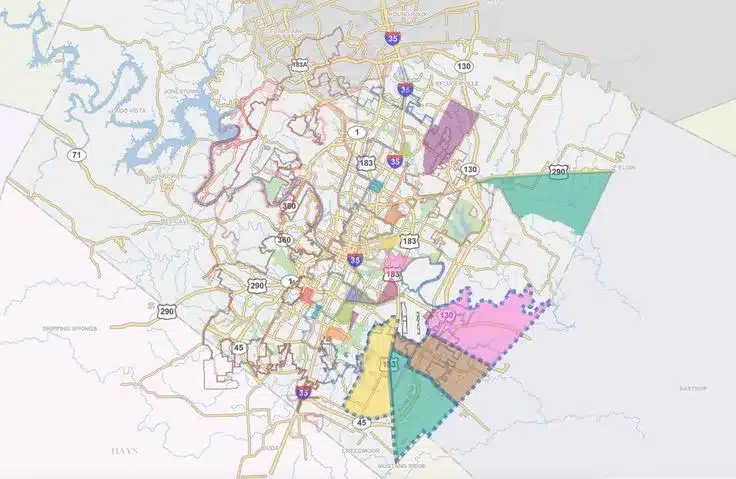
Austin OZ Spotlight: The Crystal-Line Project
Does the current Austin market have a high-growth, fully compliant OZ project that perfectly bypasses the 2.0 map risks? Yes. Real International Realty is exclusively offering access to the flagship Crystal-Line Project, tailored exactly for this policy window.
- Transit-Oriented Development (TOD): Within walking distance to a future core light rail station of Austin’s historic Project Connect, offering incredible real estate resilience and explosive growth potential.
- Core Location Dividend: Situated in the East Austin development corridor, it is one of the very few tracts in the main urban area that combines mature urban renewal infrastructure with a qualified OZ status.
- Reduced Risk & High Density: Construction is already actively underway, significantly lowering early-stage uncertainties. The project seamlessly blends residential, commercial, and transit functions.

If you are interested in how the 2026 policy transition affects your investment choices and would like to learn more, contact our investment team today !
💡 Quick FAQ: Navigating the 2026 OZ Policy Shift
Q1: Will my 1.0 project still be tax-free after the 2.0 map is released?
A: Absolutely. As long as the project meets the IRS core metrics (like >10% funding) by the end of 2026, it is protected by a grandfather clause. The 10-year tax-free growth remains valid for life.
Q2: What is the biggest difference between OZ 2.0 and 1.0?
A: Stricter barriers and 25% fewer zones. The 2.0 era enforces tighter income limits, drastically reducing the total number of qualified zones nationwide and making premium projects much scarcer.
Q3: Why choose Opportunity Zones over a 1031 Exchange for capital gains?
A: OZ offers permanent tax elimination, while 1031 is just a deferral. 1031 is strictly for “real estate for real estate.” OZ accepts gains from stocks, crypto, or business sales, and after 10 years, 100% of your capital appreciation is federally tax-free.