


Executive Summary:
Austin Leads Texas: With a 2.1% population growth rate, Austin remains the fastest-growing major metro in Texas, outpacing Houston and Dallas.
Economic Outperformance: Austin’s job growth (0.7%) and GDP growth (2.4%) significantly exceed the 2026 national averages.
Market Maturity: The shift from “explosive boom” to “sustainable stability” offers a strategic entry point for investors seeking long-term yield over speculative flips
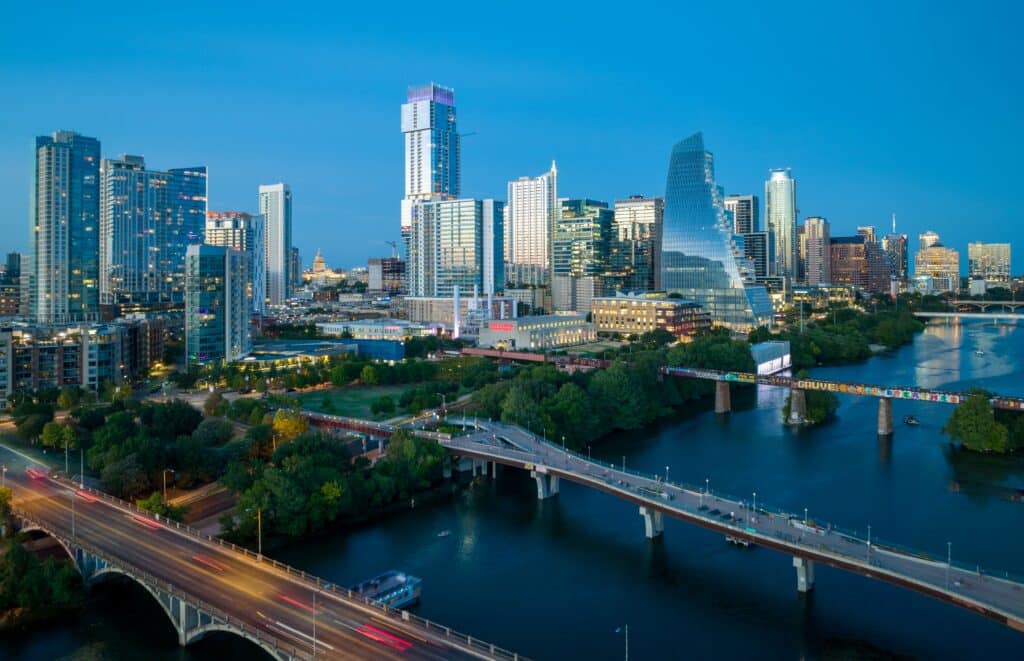
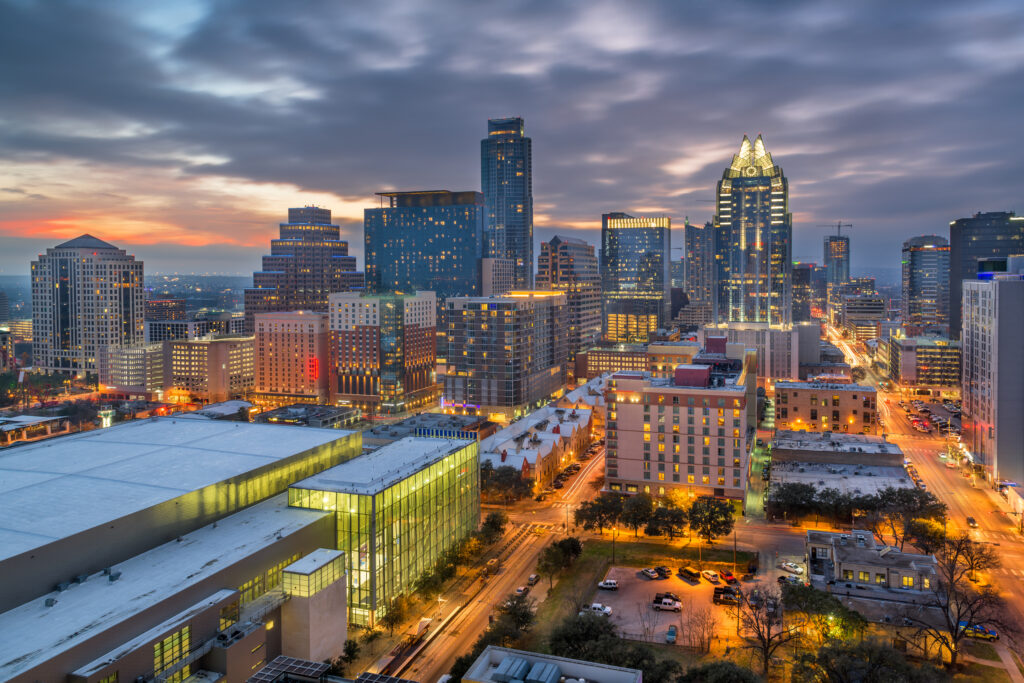
Against the backdrop of a broader U.S. economic slowdown in 2025, Austin as Texas’s capital city continues to show remarkable resilience. Both in population growth and overall economic performance, Austin remains one of the top-performing metro areas in the state.
Its strong tech base, continuous inflow of new residents, and a steady pipeline of real estate and infrastructure projects have together helped sustain the city’s growth momentum.
Population Growth
Austin’s metropolitan expansion shows little sign of slowing. The latest data puts the region’s population at approximately 2.62 million residents.
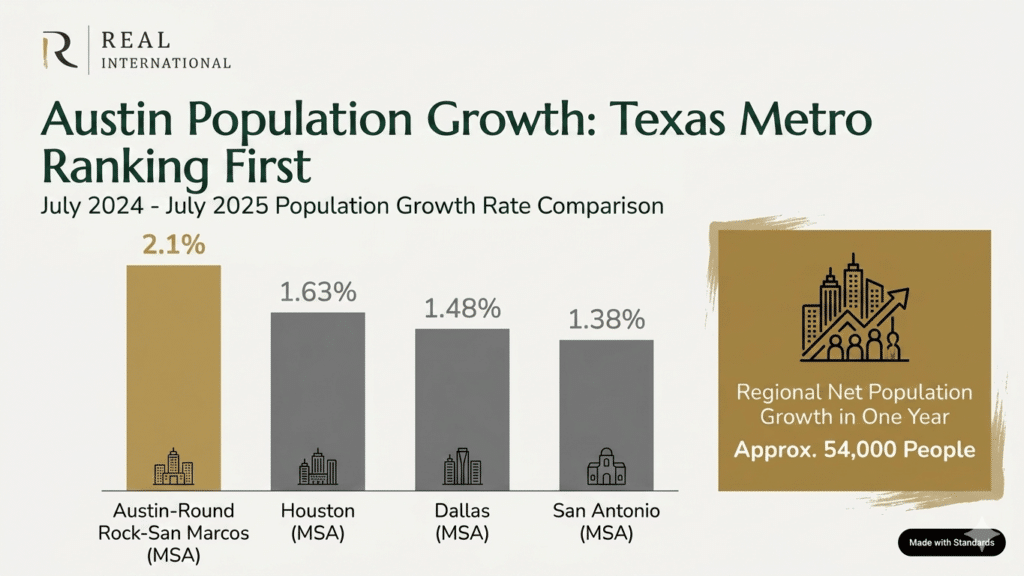
From July 2024 to July 2025, Austin’s metro population grew by 2.1%, ranking first among Texas’s major metros—outpacing Houston (1.63%), Dallas (1.48%), and San Antonio (1.38%). That translates to roughly 54,000 new residents in just one year.
Looking at the longer trend since the 2020 Census, Austin has added about 337,500 new residents. Domestic migration remains the primary driver, contributing roughly 153,000 people (45.4%), followed by international migration (103,000) and natural population growth (81,000).

Economic Performance
Behind this continued inflow of people lies a robust and resilient labor market. While not entirely immune to the national economic slowdown, Austin’s performance has stood out.
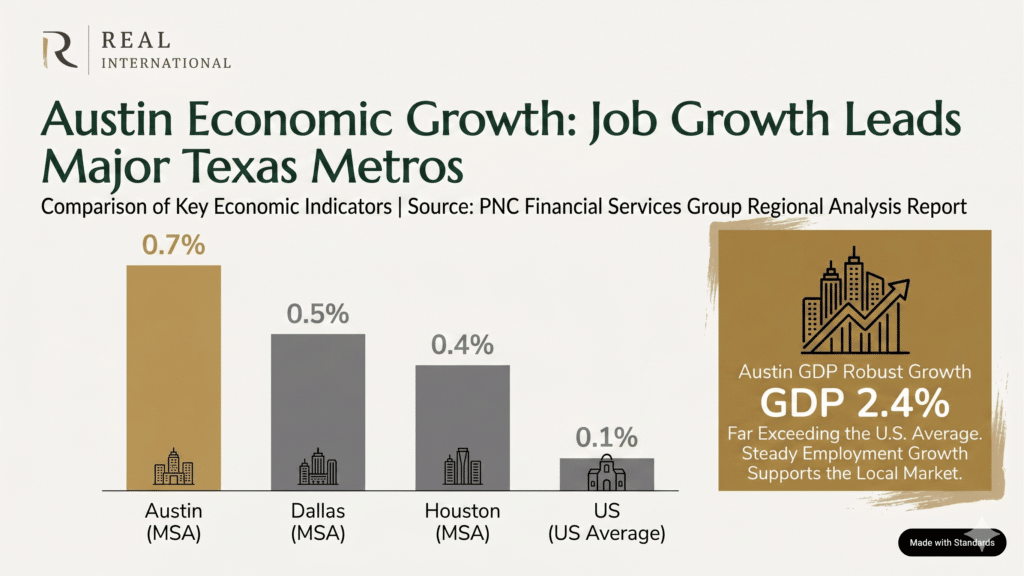
According to a regional report from PNC Financial Services Group, Austin’s job growth reached 0.7% over the past year, far exceeding the national average of 0.1% and outperforming peers like Houston (0.4%) and Dallas (0.5%). Meanwhile, the city’s GDP grew by 2.4%, signaling consistent underlying strength.
PNC senior economist Kurt Rankin attributes this to Austin’s diversified economic structure and its concentration of leading tech and AI companies. This innovation-driven economy and strong job creation capacity have enabled Austin to withstand national headwinds and maintain its status as one of Texas’s most dynamic markets.
As Governor Greg Abbott noted, “Texas offers endless opportunities for hardworking Texans and innovative entrepreneurs.” Austin’s solid employment performance is a prime example of how this statewide growth story continues to unfold.
A More Stable Outlook for 2026
Looking ahead, Austin’s market is transitioning from “explosive boom” to “sustainable stability.” While national headwinds persist, several key factors are ensuring local resilience:
Corporate Confidence is Returning: Trade policy uncertainties from 2025 have normalized, encouraging corporate expansion plans to resume.
Infrastructure Momentum: Large-scale projects across Central Texas continue to support commercial demand.
Market Maturity: This stable environment offers a strategic entry point for investors focusing on long-term yield.

📍Interested in exploring investment opportunities aligned with Austin’s long-term trajectory? Contact us to discover where the next wave of growth may take shape.