

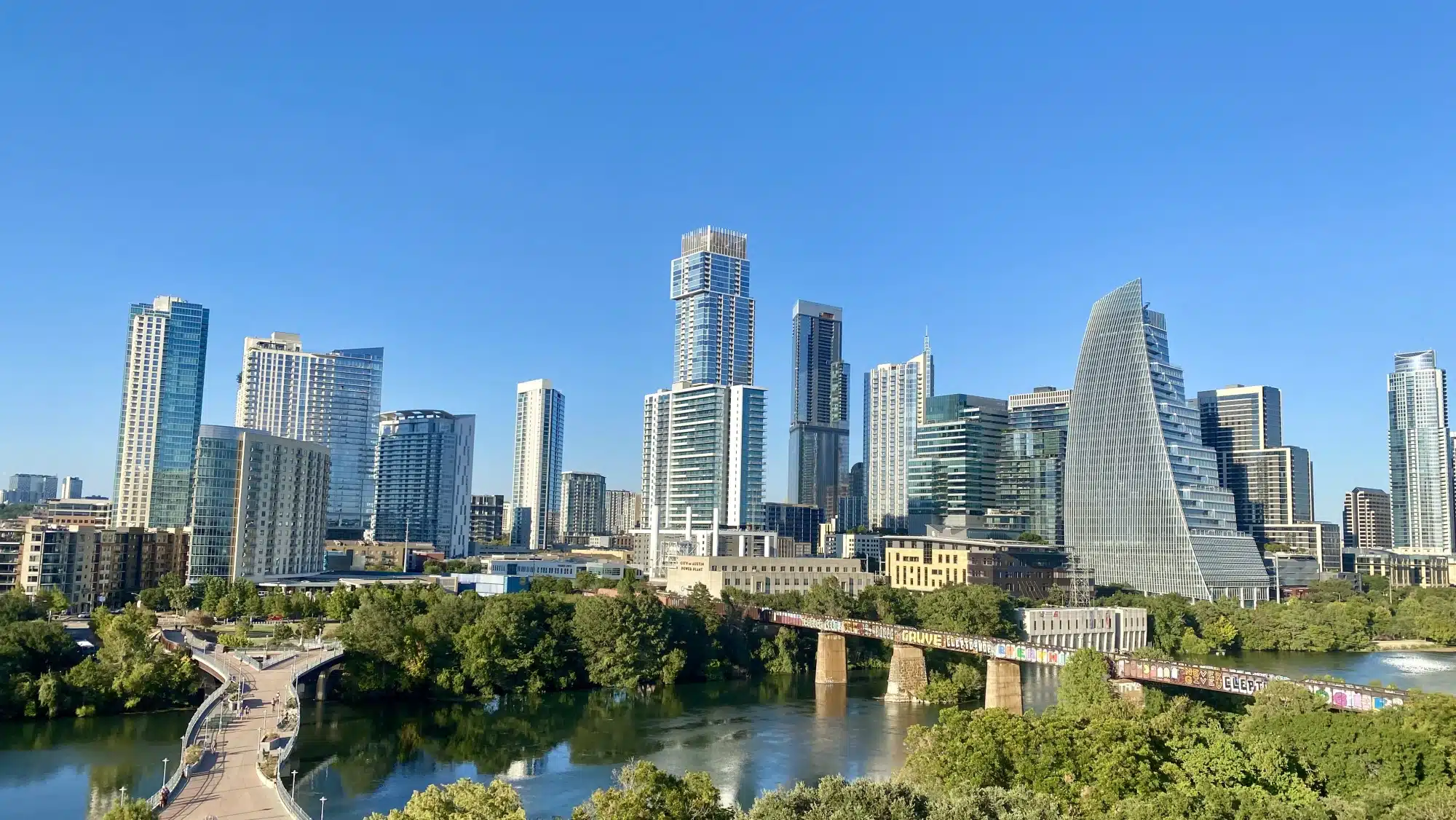

Two recent headlines capture the shifting balance of economic power in America.
In CoworkingCafe’s newly released 2025 U.S. Economic Prosperity Index Report, Austin ranks first among all large U.S. metros (population over 500,000), reaffirming its role as the fastest-growing regional economy in the country.
Meanwhile, Fermi Corp., an AI infrastructure company backed by former Texas Governor Rick Perry, has filed for a $715 million Nasdaq IPO, marking a symbolic moment as Texas’s AI and energy ambitions move into the public markets.
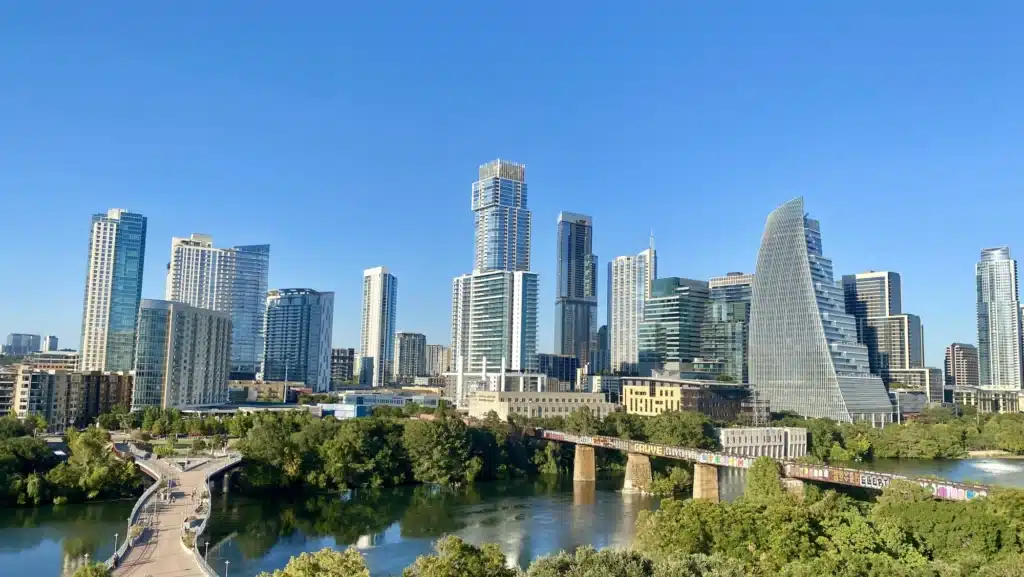 (Image from ATX Today)
Together, these stories reflect a deeper trend: Texas is no longer chasing innovation; it’s defining it. And at the center of that transformation is Austin, a city that has become a model for sustainable, innovation-led growth.
While many U.S. cities are still following Silicon Valley’s playbook, Austin has developed a growth logic of its own. Its success goes far beyond population or business expansion. The city’s strength lies in advancing on two fronts at once: economic fundamentals and capital vitality, a dual momentum that continues to push Austin ahead of its peers.
The Most Prosperous Large City in the U.S.
CoworkingCafe’s analysis highlights what makes Austin’s rise so distinctive: balanced fundamentals, a diversified economy, and steady inflows of both capital and talent.
Over the past five years (2019–2023), Austin’s economic indicators tell a clear story of momentum and resilience:
GDP expanded by 51%
New business registrations surged 71%
Median household income rose 33%
Housing inventory increased 12%
College-educated population grew 4%
By 2023, the metro’s GDP exceeded $248 billion, the highest among America’s emerging metropolitan economies.
 (Image from CoworkingCafe)
This strength stems from a well-balanced urban ecosystem rather than reliance on any single sector. Technology anchors the city’s innovation economy through employers like Dell, Apple, and Oracle; government and education provide stability as Austin serves as Texas’s state capital and home to the University of Texas at Austin; while the city’s creative industries,from music and film to gaming,add cultural and economic depth.
Long-term infrastructure investment has further reinforced this foundation. The voter-approved Project Connect light-rail initiative reflects Austin’s continued commitment to connectivity and sustainable development. Even amid short-term slowdowns in tech hiring or housing, the city’s multi-industry structure continues to support stable growth.
 (Image from KXAN)
As UT Austin’s Steven Pedigo notes:
“Workforce is the new currency of economic development. Cities that are serious about long-term growth are investing in talent — not just attracting it, but cultivating it through aligned education, training, and upskilling strategies. This is where economic development and workforce development converge. ”
Austin embodies this talent-driven growth model, where innovation and human capital remain the city’s most renewable resources.
Texas’s New Chapter in AI and Energy
If Austin’s top ranking showcases the city’s economic strength, the upcoming IPO of Fermi Corp. reflects Texas’s growing technological ambition.
Backed by former Texas Governor Rick Perry, the Amarillo-based firm plans to raise $715 million at an $8 billion valuation, merging next-generation nuclear power with AI computing infrastructure to redefine how energy and data converge.
 (Image from CHRON)
Its flagship Project Matador, located on the Texas Tech University campus, envisions 15 million square feet of integrated energy and AI facilities with up to 11 gigawatts of generation capacity by 2038, one of the largest projects combining AI and next-generation energy infrastructure worldwide.
Beyond its scale, Fermi’s IPO also signals something broader: Texas is emerging as the epicenter where AI, energy, and political power intersect. With vast land, a deregulated grid, and deep roots in the oil and gas industry, the state offers a uniquely fertile environment for AI infrastructure.
From Tesla and Microsoft to Google and Meta, leading tech firms are already expanding data and AI operations across Texas, further positioning the Lone Star State as America’s new frontier for innovation and energy transformation.
 (Image from Texas Real Estate Research Center)
From City to Industry: Texas at the Center of America’s Next Growth Wave
Both CoworkingCafe’s report and Fermi Corp.’s IPO highlight the same underlying trend: Austin and Texas are becoming the central engine of U.S. innovation and economic momentum.
Austin’s ascent is no coincidence. It reflects the coordinated progress of technology, policy, education, and infrastructure. With AI, energy, and capital markets now converging, Austin is not only the fastest-growing city in the nation but also a strategic hub for the next generation of industry and investment.
Interested in learning more about Austin’s ongoing transformation and Real International’s insights into Texas real estate and investment opportunities?
Contact us at info@realinternational.com.