

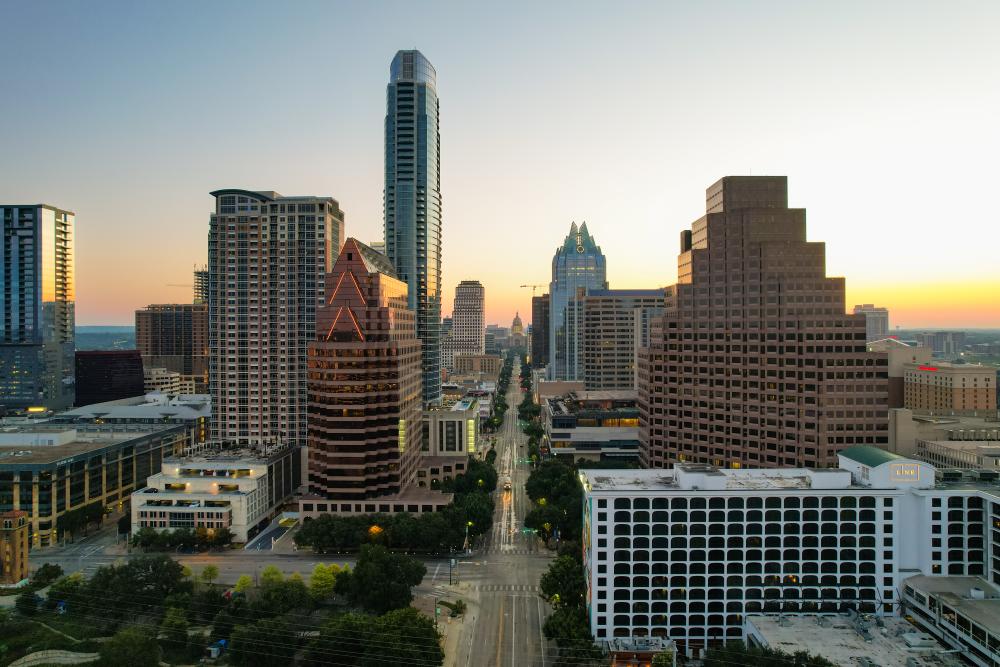

Austin’s commercial real estate (CRE) market is at a significant inflection point. After a four-year correction that began in mid-2022 and extended through 2025, the underlying data is beginning to shift. While construction pipelines are collapsing, population growth continues, capital markets are slowly thawing, and a generational wave of advanced manufacturing investment is reshaping the economic base of Central Texas.
At Real International, we believe the most successful investors in this new cycle will be those who look past the noise and focus on the structural shifts in supply, the “Samsung effect,” and the gradual stabilizing of the lending environment.
The Austin Cycle: From Boom to Correction
Austin has navigated one of the most dramatic boom-and-correction cycles in the country. Understanding the timing and sequencing of this cycle is essential for any strategic investment in the region.
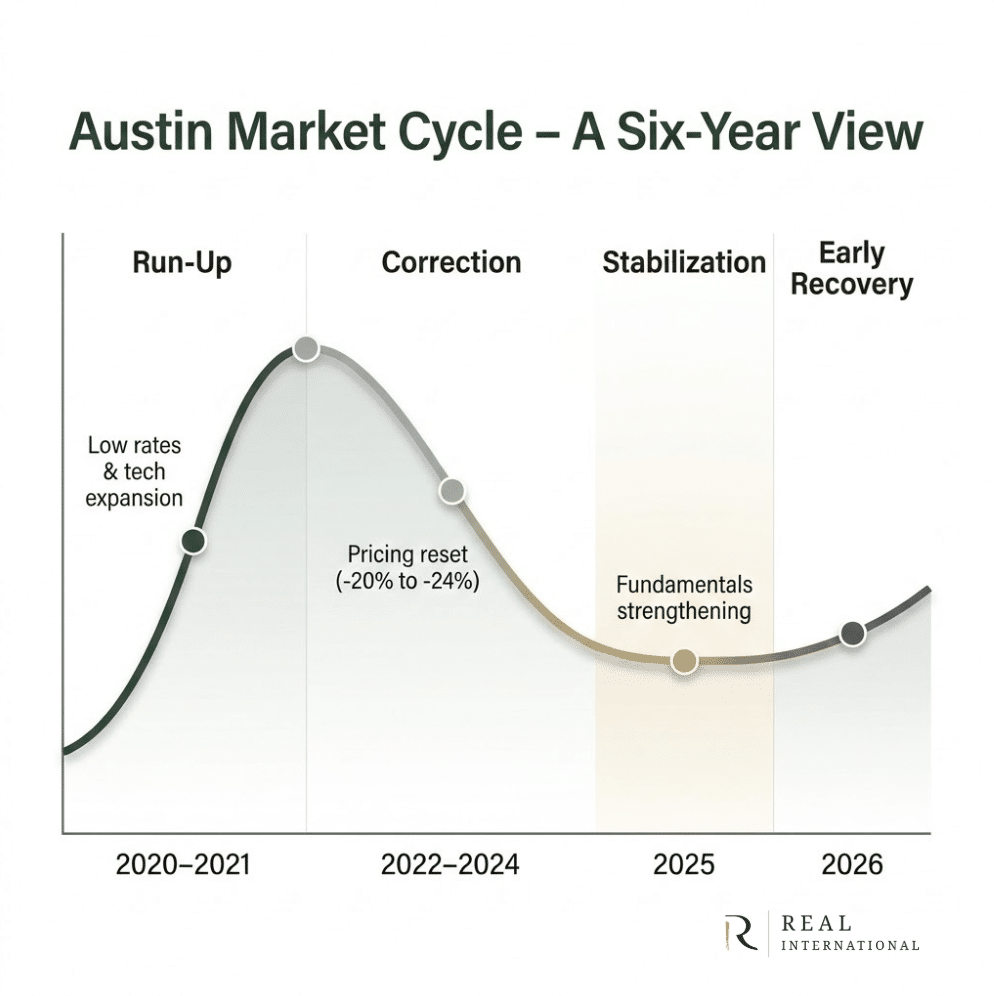
The Run-Up (2020–2021): Driven by record-low 2.65% mortgage rates and massive stimulus, Austin saw a once-in-a-generation surge. Multifamily cap rates compressed below 4% per CBRE, and residential prices climbed nearly 50% in under two years.
The Correction (2022–2024): The Federal Reserve’s rapid tightening cycle, raising rates to over 5%, triggered a severe reset. Austin’s multifamily sector absorbed a record wave of supply, with vacancy rates jumping from 4% to over 14% according to CoStar.
Stabilization (2025):
Market fundamentals began to stabilize as new supply slowed and demand gradually caught up.
The Residential Floor: Median home prices peaked at approximately $550,000 in May 2022 based on Zillow and ABoR data. As of January 2026, the market is finding a floor at a metro median price of $417,000 with 4.6 months of inventory.
A Unique Recalibration: Unlike Dallas or Houston, which saw modest 3-5% softenings, Austin’s correction was significantly steeper at 20-24%. This reflects the region’s extreme run-up and explains why we are now seeing such a compelling recalibration of value in Central Texas.
The 2026 “Supply Cliff”
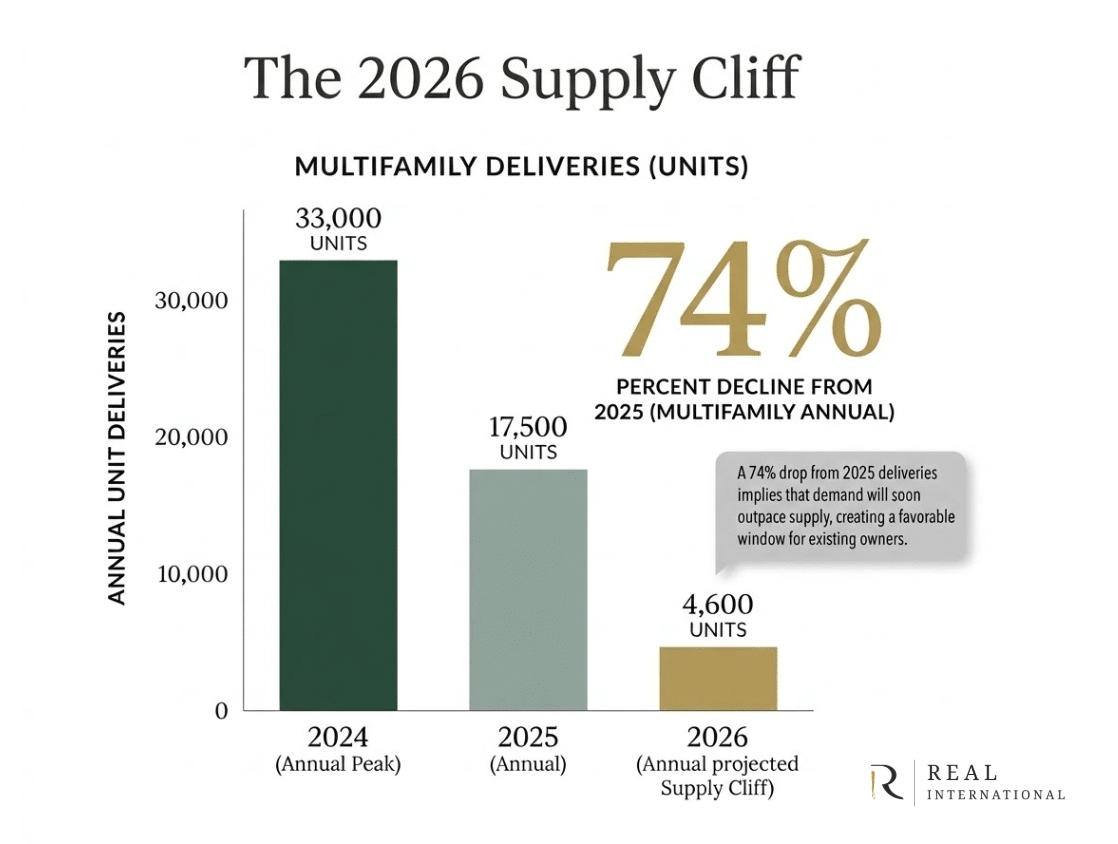
Perhaps the most critical data point for the coming 24 months is the collapse of the construction pipeline.
Austin delivered a staggering 33,000 multifamily units in 2024. While 2025 saw approximately 17,500 deliveries, CoStar projects only 4,600 units for 2026, a 74% decrease in just one year. In the office sector, the pipeline has plummeted by 91% according to the Texas Real Estate Research Center. When demand remains steady and supply contracts this sharply, the fundamental math begins to work in favor of existing owners and patient capital.
A New Economic Engine: Advanced Manufacturing
Austin’s economy is evolving beyond software. While tech employment saw a 5% contraction during the correction, other sectors have surged to provide a more durable base. Education, health services, and government now account for 40% of recent job gains, making the economy more resilient than during the tech-heavy boom years.
The Semiconductor Core: Samsung’s $37 billion investment in Austin and Taylor is the largest of its kind, supported by $4.7 billion in CHIPS Act funding. The Taylor fab is on track to be operational by late 2026, creating thousands of permanent manufacturing and construction jobs.

- The Tesla Multiplier: Tesla’s $16.5 billion AI chip deal with Samsung further cements the region as a global hub for industrial innovation.
- Venture Capital: Austin climbed to third place nationally in VC funding in early 2025, signaling that the “innovation engine” is far from stalled.
Asset Class Assessment
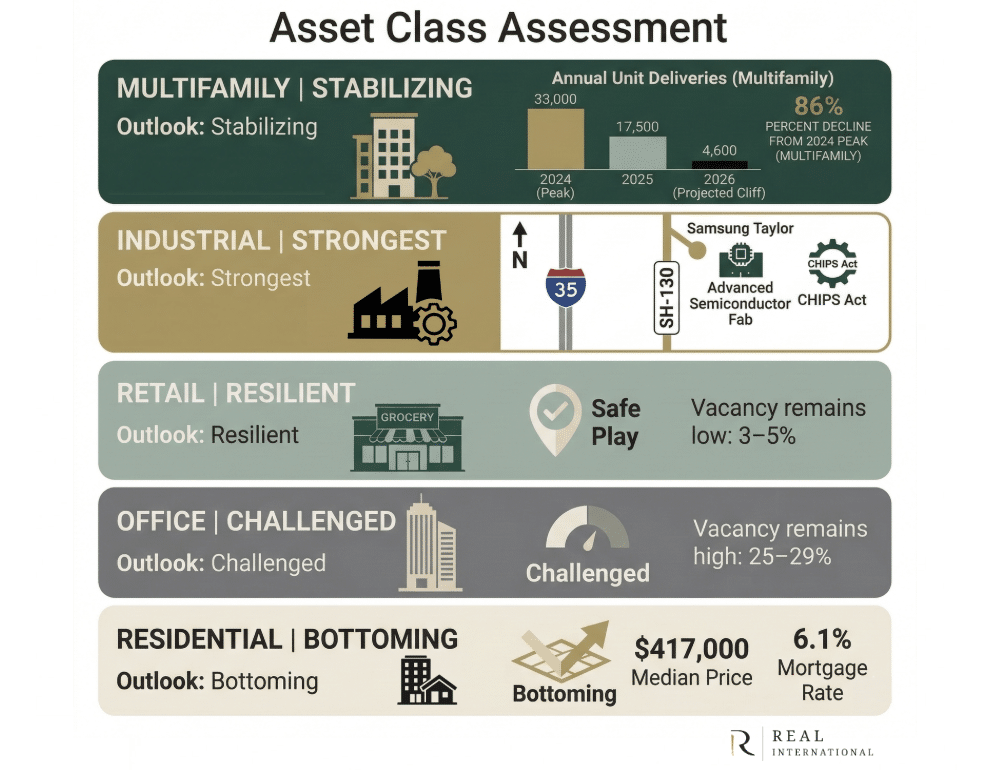
Not all sectors are recovering at the same pace. To make the most informed investment decisions, we must look at the specific data driving each asset class in the Central Texas region.
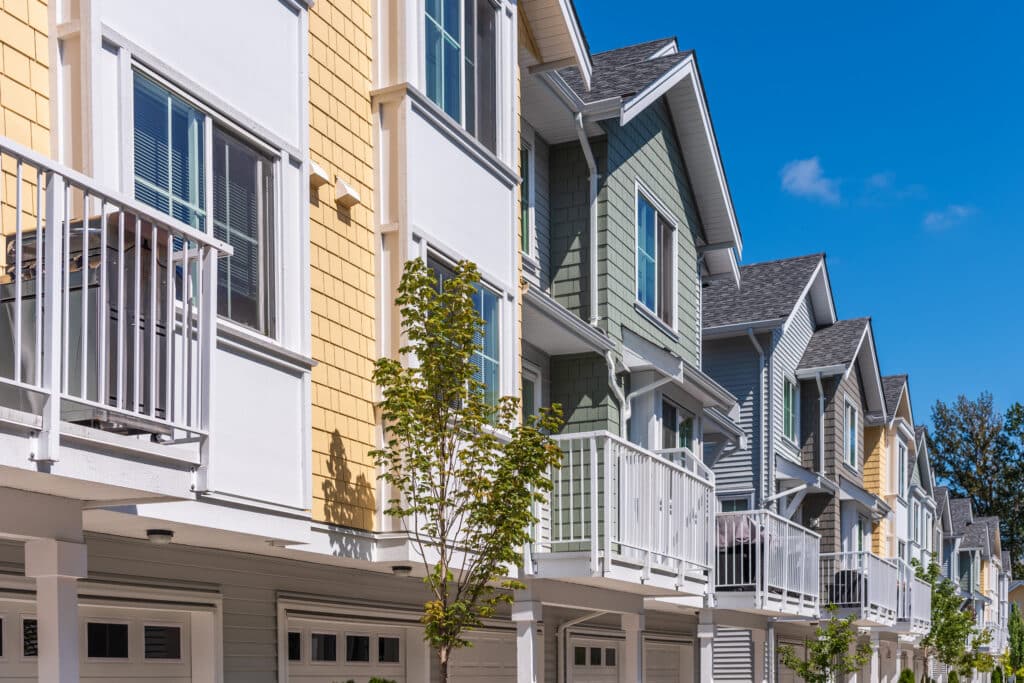
Multifamily | Early Signs of Stabilization
While vacancy rates climbed from 4% to over 14% during the recent supply wave, Austin’s demand remains strong.
- Record Absorption: Q2 2025 saw 7,142 units absorbed, the highest quarterly total in four years. For the full year 2025, Austin absorbed approximately 20,000 units, ranking it as a top national market alongside New York and Dallas.
- The Opportunity: We are also watching the $162 billion refinancing wall for 2026, which may create distressed acquisition opportunities for well-capitalized buyers.
Industrial | The Advanced Manufacturing Powerhouse
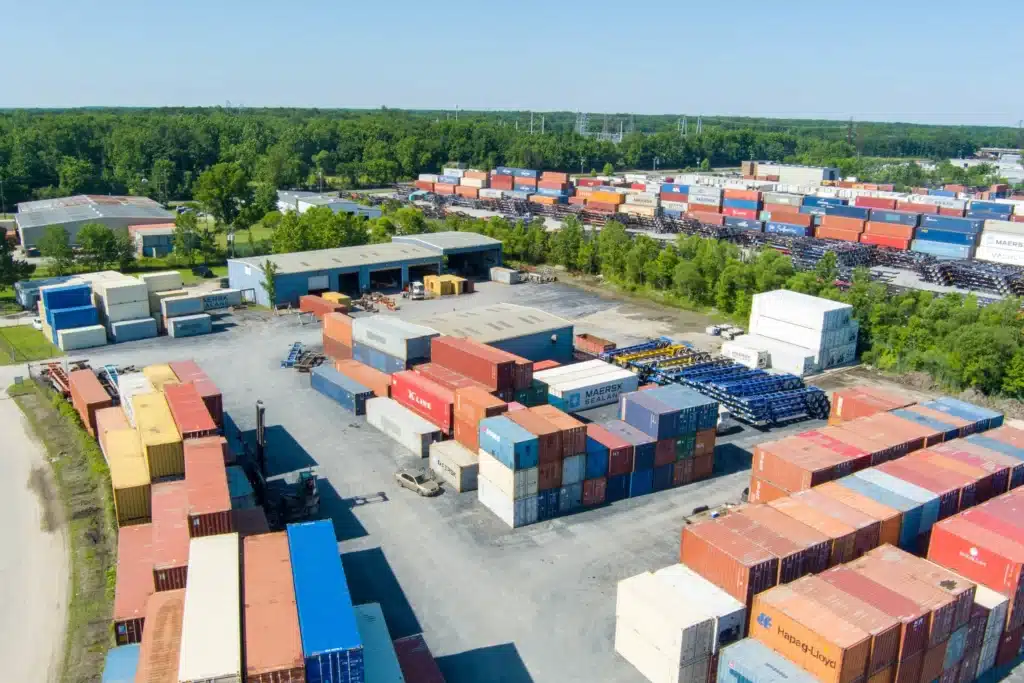
This remains the sector with the strongest macro tailwinds, driven by the structural shift toward high-tech manufacturing.
- The “Samsung & Tesla” Effect: Demand along the I-35 and SH-130 corridors is being fueled by Samsung’s $37 billion investment and Tesla’s $16.5 billion AI chip deal.
- Supply & Yields: Construction has fallen significantly from peak levels, keeping the market tight with cap rates settling in the 5.2-5.8% range.
Retail | Record-Low Vacancy
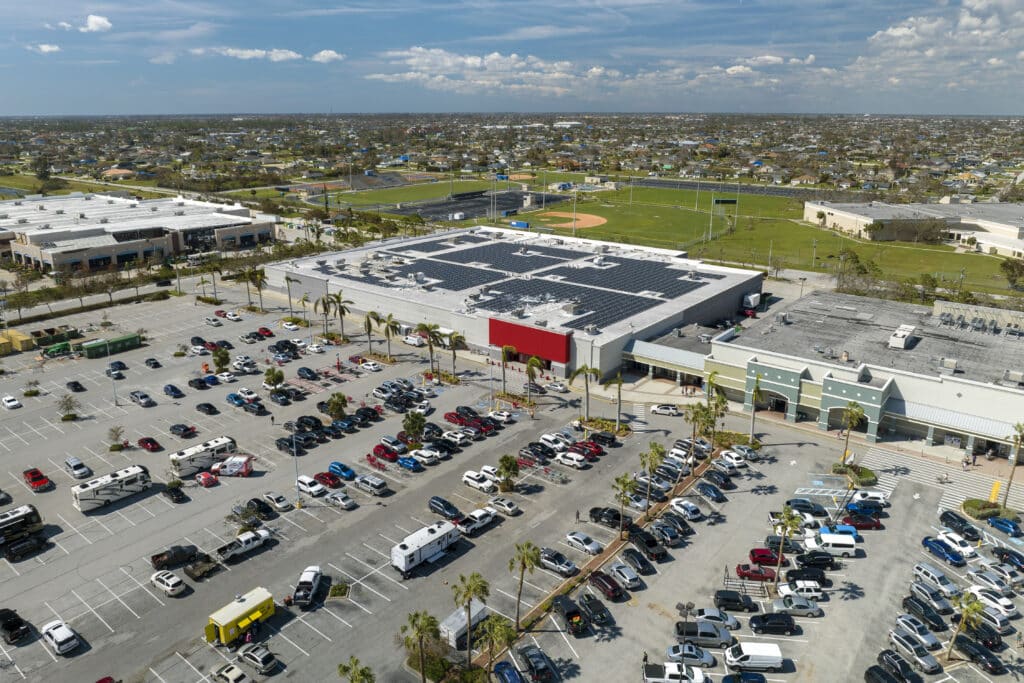
Retail is quietly the most resilient sector in Austin, directly benefiting from the metro’s 1.8% population growth.
Surging Demand: Vacancy remains near record lows at 3-5%. Net absorption reached 806,000 square feet through Q3 2025, a 48% increase quarter-over-quarter.
Strategic Play: Grocery-anchored centers (H-E-B, Walmart) continue to drive the market, offering stable yields between 6-7%.
Office | A Necessary Rebalance
While the office sector remains the most challenged, the groundwork for a recovery is being laid.
Positive Momentum: Net absorption finally turned positive in Q3 2025 at 967,000 square feet.
High Vacancy: Overall vacancy hovers near 25%, with downtown reaching 31.8%.
Supply Contraction: The construction pipeline has contracted by a massive 91%, which is the essential first step to rebalancing the market by 2027.

Residential | Finding the Market Floor
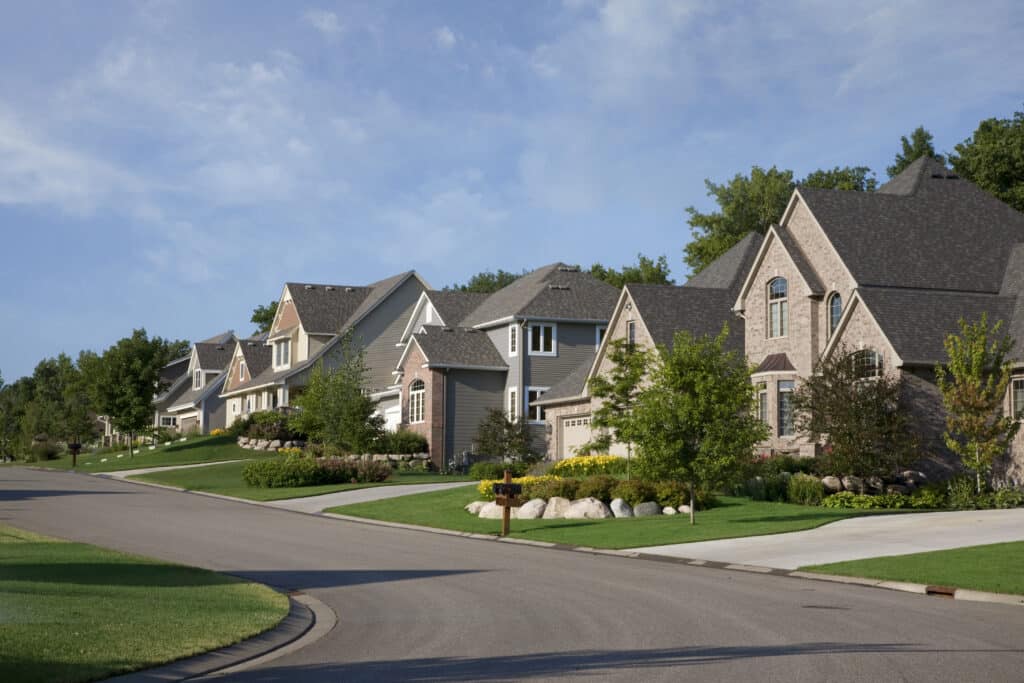
Many of us live this market every day, so this section deserves particular attention. After a significant 20-24% price correction from the 2022 peak, Austin’s residential market is entering a buyer-friendly stabilization phase.
- Stabilized Pricing: The median sold price across the MSA was $435,000 in 2025, down 2.4% from 2024. As of January 2026, Redfin reports the Austin city median at $500,000, while the broader metro MLS shows $417,000 with 12,851 active listings and 4.6 months of inventory.
Future Outlook: Anticipating Austin’s housing correction to bottom in mid-year 2026, followed by modest 1-3% appreciation before returning to a more sustainable 3-5% annual growth range by 2027-2030.
Headwinds Worth Watching
An honest market assessment has to account for what could go wrong. Several forces bear watching.

- The refinancing wall: Over $1.5 trillion in CRE loans will have matured by the end of 2026, one of the largest refinancing waves in history, per Northmarq. The average rate on maturing 2026 loans is estimated at 4.59%, versus current origination rates above 6.0%.
- Tariff and policy uncertainty: The evolving trade policy environment adds noise to an already complex capital markets picture.
- Interest rate trajectory: While markets anticipate further Fed easing, the pace remains uncertain. The 10-year Treasury has held between 4.00-4.25%, and long-duration rates may not decline as quickly as short-term rates.
Looking Ahead
The data suggests Austin may be entering the early innings of a new recovery cycle. Construction pipelines are shrinking, capital markets are slowly thawing, while population growth and major semiconductor and AI investments continue to support long-term demand.
That recovery will not be uniform across sectors or submarkets. Ongoing macro headwinds all argue for conservative capital structures and realistic assumptions. The winners in this cycle will be those who buy right, hold patiently, and resist the temptation to underwrite to best-case scenarios.
Stay Connected
At Real International, we remain focused on helping our clients and partners navigate Austin’s evolving real estate market with thoughtful analysis, disciplined investment perspectives, and local market insight. As the cycle continues to unfold, we will remain on the lookout for rare opportunities that can be acquired at a compelling basis or offer attractive risk-adjusted returns.
If you find these insights valuable, we invite you to continue following our newsletter for future Austin market updates and analysis.
We also welcome your feedback, if you have comments or questions about this report, feel free to reach out to our team at info@realinternational.com.