



Executive Summary: In this commercial real estate case study, we explore how our team helped a high-earning corporate executive legally offset $5 million in taxable income right before year-end. By strategically pivoting his $20 million investment away from overvalued assets and toward AI-resistant commercial properties (daycares and luxury retail), we utilized the U.S. Bonus Depreciation policy to neutralize his massive tax exposure. Leveraging deep industry relationships, our team executed three complex commercial loans in under 20 days, locking in a 7% annual cash flow and closing just days before the December 31st deadline.
Every December, high-earning professionals and business owners run into the exact same dilemma: their income looks great on paper, but the impending tax bill feels incredibly painful. For many, the smartest move isn’t a last‑minute panic in the stock market, but a strategy that reduces taxable income while building long-term wealth.
This was the exact situation an Indian senior executive faced when he approached our team in early December. His goal was clear: he urgently needed to offset $5 million of taxable income before the year ended.

He had spent months looking for commercial properties on his own, but like many non-professional investors, he became overwhelmed and hesitated until the clock was almost out. By the time he came to us, most brokers and banks told him that closing a commercial loan before the holidays was practically impossible.
🚫 The Value Trap: Avoiding Overpriced Assets
Time pressure wasn’t the only challenge, his initial investment direction posed another risk.
He was strongly inclined to purchase a high-priced gas station, assuming its depreciation potential would provide significant tax benefits. However, after reviewing the numbers, we warned him that many gas stations on the market were severely overpriced, leaving almost no room for future upside.
More importantly, investing in gas stations carries structural headwinds from the rise of new energy and electrification.

💡 The Pivot: Investing in AI-Resistant Core Assets
We guided the client to pivot his strategy toward real-world, service-based businesses that are deeply anchored in local demand. Ultimately, we secured a $20 million commercial portfolio consisting of three prime assets:
Two established daycare facilities
One retail property located within a high-income residential community

The logic behind this selection is grounded in long-term resilience. These are “AI-resistant” properties. No matter how advanced technology becomes, children will always need physical early education, and affluent households will still pay for offline, experience-based services like specialty coffee and dog grooming.
By acquiring these assets, we tied his investment to persistent community spending power rather than short-lived trends. The total acquisition value was approximately $20 million, effectively securing exposure to a stable and economically durable tenant base.
📉 The Tax Strategy: Leveraging Bonus Depreciation
Selecting the right properties was only half the battle; the next step was generating the necessary deductions. To tackle his year-end tax crisis, we utilized a powerful provision in the U.S. tax code: Bonus Depreciation.
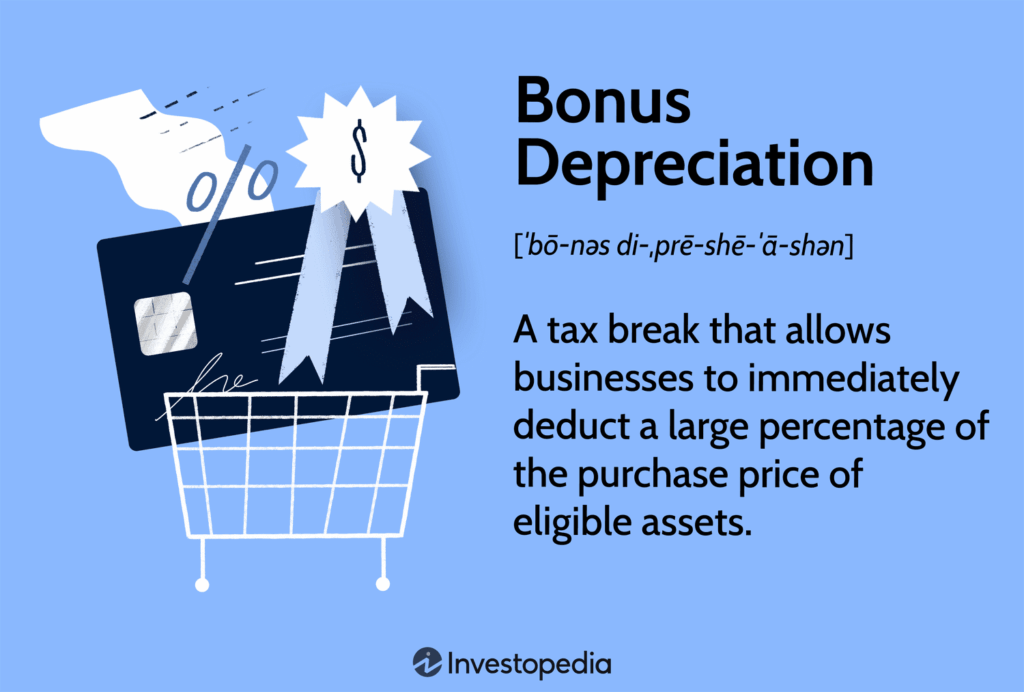
Normally, commercial real estate depreciates slowly over decades. However, by conducting a cost segregation study, we applied bonus depreciation rules to write off specific property components at an accelerated rate.
The Write-Off: This structure allowed his $20 million portfolio to generate a massive paper depreciation loss in year one, which precisely offset his $5 million in taxable income.
The Returns: Crucially, this wasn’t just a pure tax play. These carefully selected properties were underwritten to deliver an ongoing 7% annual cash flow, giving the client the perfect blend of immediate tax relief and long-term, cycle-resistant income.
⏱️ The 20-Day Execution Sprint
On paper, the strategy was elegant; in reality, the timeline was brutal. We had just over 20 days left in the year, and the holiday slowdown was paralyzing the banking ecosystem.
This is where real-world execution and relationships matter more than theory. Our team leveraged long-standing banking connections to find a senior lender willing to take on this highly time-sensitive file. Our internal teams and external partners worked relentlessly through the weekends, even coordinating with lenders while on their own holiday vacations, to push the underwriting forward.

Against all odds, the commercial loans were finally approved on Christmas Eve, leaving only four business days before the final tax deadline. With our most experienced project manager personally coordinating every logistical detail between the title company, the attorneys, and vacationing sellers, all three transactions successfully closed before year-end.
Plan Ahead for Your Wealth Preservation
This intense 20-day sprint reinforces an important truth: commercial real estate investing requires far more than just understanding the tax code. True success relies on avoiding structurally declining assets, designing the right ownership structure, and executing flawlessly under pressure.

If you are a high-earning professional looking to build a commercial portfolio that can weather economic cycles while legally optimizing your taxes, reach out to us and let’s start customizing your real estate and tax optimization strategy!